Welcome to the website of the Advanced Joining Processes Network.
This network is a new, dynamic, ongoing forum dedicated to disseminating knowledge and fostering general discussion on the latest advancements in advanced joining processes. By joining this initiative, you will be able to connect top researchers, industry professionals, and academics from around the world in a friendly but highly informative manner.
The networking series focuses discussions across three main technologies:
Adhesive Bonding
Advanced adhesive materials
Surface preparation & joint design
Durability & mechanical performance
Automation & process control
Sustainability & recyclable joints
Nondestructive inspection
Welding
AI Integration & digital twins
Joining dissimilar materials
Additive manufacturing
Advanced metallurgy
Sustainable welding practices
Joining by Forming
Joining dissimilar materials
Innovative joining by forming
Hybrid joining processes
Durability & performance
Computational modeling
Network activities
The networking series consists of 10 online events per year. Each event is designed to be concise but highly interactive, lasting 1h 30m.
Main Presentation
A 30-minute focused presentation from a top researcher in the field of advanced joining, covering a specific, cutting-edge topic.
1-Hour Debate
An extended, moderated Q&A and open discussion session, allowing all participants to engage, ask questions, and share insights.
Registration
Annual registration tiers
Registration Tier
Annual Cost
Individual participation
50 EUR
Company / Sponsor
1000 EUR
Participation benefits for all participants
Full session access: Unlimited access to all 10 live online sessions and discussions.
Event documentation: Access to a comprehensive final document, with ISBN and DOI numbers, containing all conference presentations and the full list of network participants.
Company & sponsor specific benefits
Companies that register for the network event will receive the following benefits:
Brand visibility: Your company logo will be prominently featured on our website as a series sponsor.
Complimentary conference pass: One free registration to be used at any one of the following conferences organized by our group:
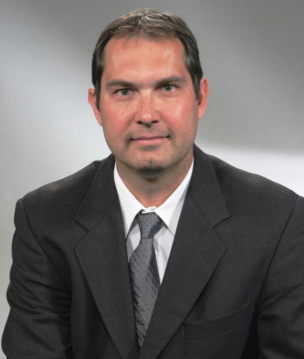
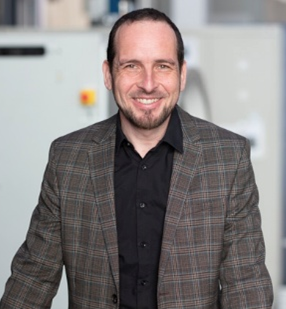
Bio: Dr. Andreas Lutz is a prominent materials scientist and the Global Technology Leader for Automotive Adhesives at DuPont Mobility & Materials, based in Switzerland. With a career spanning over two decades in the adhesive industry, he began his professional journey in 1998 as an R&D group leader at Gurit-Essex AG, where he was instrumental in the early development of the BETAMATE structural adhesive technology. Following the acquisition of the business by Dow in 2002, and its subsequent transition to DuPont, Dr. Lutz rose through the ranks to become R&D Director in 2012, overseeing applied industrial adhesive technologies. His work is primarily focused on the advancement of "crash-durable adhesives" (CDAs), which are critical for modern lightweight vehicle architectures and the structural integrity of electric vehicle (EV) battery packs. Under his leadership, his teams have received prestigious industry recognitions, including the Meyer-Galow Prize for Business Chemistry, R&D 100 Awards, and Edison Awards, specifically for innovations that enable the bonding of dissimilar materials like carbon fiber reinforced plastic (CFRP) to steel. Dr. Lutz is a widely published author and a frequent plenary speaker at international conferences, recognized globally for his expertise in enhancing vehicle safety, thermal management, and sustainability through advanced bonding solutions.
The smart bond revolution: designing structures with on-demand repair
Abstract: This presentation will elaborate how chemistry has impacted the automotive industry by enhancing mechanical performance, creating lighter structures, and designing efficient battery modules. Ultimately, these innovations contribute to sustainability by reducing CO2 emissions, decreasing fuel consumption, and improving the mileage and charging speed of battery-driven vehicles. We will explore three major innovation steps where chemistry has enabled breakthroughs in automotive applications. These include: 1. Body structural toughened epoxy adhesives that facilitate lightweight body designs in automotive body shops by durably bonding multi-substrate materials. 2. Two-component structural polyurethane-based adhesives that enable fiber-reinforced composite bonding in automotive assembly shops. 3. Polyurethane and specially capped polymer technology that supports thermally conductive bonding for simplified and more efficient battery designs in electric vehicles. Additionally, I will emphasize that it is not only the adhesive formulation that drives joint performance but also the application of the right chemistry. The synthesis of specific polymers and the selection of polymer building blocks and functional groups are crucial, depending on the adhesive base chemistry and the vehicle application. Special chemistries have been developed for all three applications to meet stringent customer specifications for adhesion, mechanical performance, and automated applicability in automotive lines. Depending on the base chemistry, polymers are synthesized to participate in the curing of the adhesive formulation, whether in a one-part or two-part adhesive system.
March 27, 1 PM CET
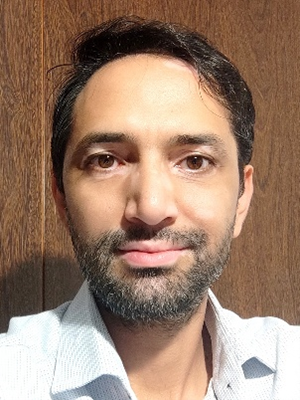
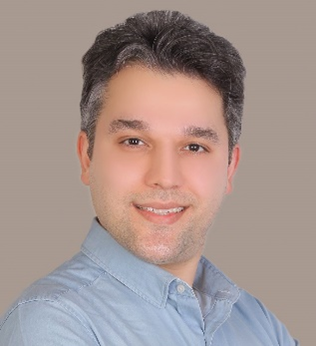
Bio: Alireza Akhavan-Safar obtained his Ph.D. in Mechanical Engineering in 2017 and has been a coordinating researcher at INEGI, Portugal, since 2018, with expertise in adhesives and adhesive joints, including fatigue, fracture, impact, and environmental effects. He has participated in numerous industrial projects on the durability assessment of bonded joints. Alireza has published over 150 ISI papers (H-index 29, Scopus), authored or co-authored 6 international books and 11 book chapters, and has delivered more than 160 presentations at international conferences, including keynotes. He has supervised or co-supervised 16 master's and 10 PhD theses and served as a reviewer for over 90 ISI journals and various international funding agencies.
Survival under fluctuating stress: Fatigue durability assessment of industrial adhesive joints
Abstract: The mechanical behavior of industrial adhesive bonds is difficult to reliably predict under fluctuating stresses and fatigue damage during long-term operation. This presentation addresses these challenges by combining experimental fatigue characterization, fatigue life assessment methods, and a custom-developed software tool for durability evaluation of adhesive joints.First, experimental investigations and empirical findings are presented to provide the necessary information for characterizing the fatigue behavior of adhesive bonds using S-N curves and crack growth trends. Experimental methodologies to assess the fatigue life of bonded structures are discussed for different application scenarios, ranging from laboratory-scale specimens to full-scale joint configurations. A novel software package is then introduced for predicting the fatigue life of adhesive bonds. Finally, the influence of environmental factors and aging on the fatigue strength of adhesive bonds is discussed based on experimental observations.
April 28 - 1 PM CET
Bio: Dr. Reza Beygi is an Associate Professor of Materials Engineering and Metallurgy at Arak University and a Principal Investigator at the Institute of Science and Innovation in Mechanical and Industrial Engineering (INEGI) at the University of Porto. Since earning his PhD from Sharif University of Technology in 2014, he has established himself as a leading expert in the metallurgical challenges of joining dissimilar materials, specifically focusing on the solid-state bonding of aluminum to steel. His research is characterized by a sophisticated integration of experimental material science and advanced computational modeling, where he utilizes tools like Computational Fluid Dynamics (CFD) and Cohesive Zone Modeling (CZM) to predict microstructural evolution and fracture mechanics. Dr. Beygi's work is particularly vital to the automotive and aerospace sectors, as his innovations in friction stir welding and interface engineering have provided critical solutions for mitigating brittle intermetallic compounds and enhancing the structural integrity of lightweight multi-material architectures. An accomplished author, he has published several influential texts, including Welding Metallurgy of Aluminium Alloys: Design, Processes, and Simulations, which bridge the gap between complex joining theory and practical industrial application.
Steel to aluminium structural joining: Process design and mitigation of IMC formation
Abstract: The industrial push for "multi-material" vehicle architectures—combining the high strength of steel with the lightweight properties of aluminum—is often hindered by a fundamental metallurgical incompatibility. When these two metals are joined using traditional thermal processes, they react to form brittle Intermetallic Compounds (IMCs). These layers significantly compromise the structural integrity of the joint.This presentation explores advanced process design strategies, focusing on mitigating IMC growth through precise thermal management and innovative joining techniques. We will examine thermal control to understand how limiting heat input and cooling rates can arrest the diffusion-controlled growth of brittle phases. The role of specialized tool geometries in friction-based processes will be discussed, showing to create robust physical bonds. Finally, the use of interlayer materials or specific process parameters will be discussed, understanding how to transition from a thick, continuous IMC layer to a thin, manageable interface. It is shown that by optimizing the process window, it is possible to achieve high-strength, ductile joints that meet the rigorous demands of the modern automotive and aerospace industries.
May 21 - 1 PM CET
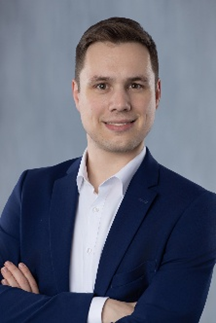
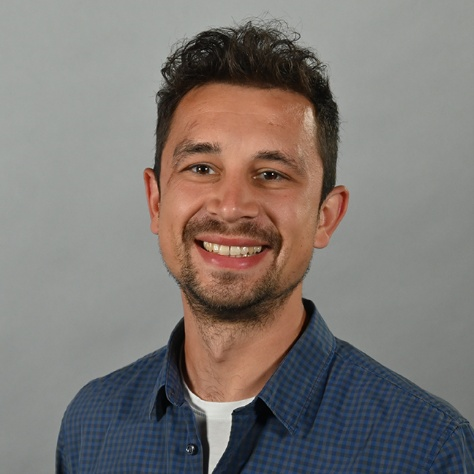
Bio: Christoph (J. A.) Beier graduated with honors in mechanical engineering at RWTH Aachen University. Since 2020, he has been working as a research engineer in adhesive bonding technology at the Welding and Joining Institute of RWTH Aachen University. In 2024 he completed the qualification as European Adhesive Engineer. His research focuses surface pre-treatment processes and surface analysis of polymers and metals, particularly laser pre-treatment processes. Christoph Beier is experienced in developing solutions by designing and validating laser treatment processes for various industrial products, as well as implementing laser processes into production plants. In his doctoral thesis he addresses an ultra-short pulsed laser pre-treatment of metal and the induced adhesion mechanisms.
Adhesion enhancement at the speed of light: Laser surface engineering for maximum bonding strength and long-term stability
Abstract: Laser treatment is a versatile tool for cleaning and structuring surfaces to optimize their properties. Such processes have been widely adopted across various industries for adhesive bonding applications. However, designing a suitable process for a new application can be challenging, as each product and material has unique requirements. The vast variety of laser sources and process parameters, as well as a reputation for long process times, often hinders implementation. This presentation will guide participants through successfully navigating the design of a laser treatment process for adhesive bonding. It will cover the fundamentals of laser surface interaction, differences in laser sources, and relevant parameters, in connection with practical examples. Various materials will be addressed, focusing primarily on metals and the mechanisms that enhance wetting and adhesion. The webinar will emphasize how laser treatment does not only improve bonding strength, but also significantly improves the long-term stability of the bond. Additionally, industrial applications of these processes will be shown, and the myth surrounding “slow” laser process will be debunked.
(RESCHEDULED!) June 23 - 1 PM CET
Bio: Mehdi Kasaei is a Principal Researcher in the Advanced Joining Processes Unit (AJPU) at the Institute of Science and Innovation in Mechanical and Industrial Engineering (INEGI) in Porto, Portugal, and a research collaborator at the University of Porto. He earned his Ph.D. with honors in Mechanical Engineering from Tarbiat Modares University (Iran) in 2016, with part of his research conducted at the University of Lisbon. Prior to joining INEGI, he worked as a postdoctoral researcher at the University of Coimbra, Portugal (2019�2021), and served as an Assistant Professor at QIAU in Iran (2016�2019). His research focuses on joining by forming and metal forming, including process and tool design, joint design, material and joint characterization, finite element modeling, and failure analysis. In recent years, his work has centered on sustainable electric vehicle battery systems and disassemblable battery pack architectures. Mehdi Kasaei is an Associate Editor for Frontiers in Batteries and Electrochemistry, serves on the editorial board of Discover Mechanical Engineering (Springer), and acts as a Guest Editor for Materials and the Journal of Manufacturing and Materials Processing (MDPI).
Joining dissimilar materials for high-performance and sustainable EV battery systems
Abstract: The rapid growth of electric vehicles (EVs) demands battery systems that are lightweight, disassemblable, economical, thermally stable, and highly reliable under thermal cycling, vibration, and crash-loading conditions. Meeting these requirements increasingly relies on joining dissimilar materials—such as copper–aluminum hybrid busbars, metallic conductors with prismatic cell terminals, and hybrid metal–composite structures in battery trays. However, mismatches in physical, thermal, and chemical properties make these joints difficult to design, while emerging circular-economy demands call for disassemblable solutions to enable repair, reuse, and end-of-life recycling. This talk reviews emerging joining strategies for high-performance battery packs, with emphasis on three domains: (i) hybrid Cu–Al busbars for reduced mass, cost, and resistive losses; (ii) busbar-to-cell terminal joints where thermo-electrical performance, mechanical strength, and disassembly ease must be balanced; and (iii) metal–composite joints in battery trays that must satisfy both structural integrity and manufacturability constraints. Conventional welding, mechanical fastening, and adhesive bonding are compared to novel solid-state processes such as friction stir welding and ultrasonic metal welding. The presentation outlines performance trade-offs, thermo-electrical–mechanical design considerations, and research needs to enable scalable, serviceable, and recyclable multi-material battery architectures.
July 28 - 1 PM CET
Bio: Dr.-Ing. Markus Wagner is a distinguished researcher and project manager at the Fraunhofer Institute for Material and Beam Technology (IWS) in Dresden, where he has built an extensive career spanning over fourteen years in advanced materials processing and structural engineering. Since January 2026, he has served as a Project Manager at Fraunhofer IWS, following a successful five-year tenure as the Manager of the "Component Design and Special Technologies" group. Dr. Wagner began his professional journey at the institute in 2012 as a researcher, eventually transitioning into a postdoctoral role in 2018 after completing his doctoral thesis on the local laser-strengthening of crash-loaded car body components. This specialized focus on automotive safety and material performance is rooted in his academic foundation at the Technische Universitat Bergakademie Freiberg, where he earned his Diploma in Engineering with a concentration in vehicle design, materials, and components. Throughout his career, Dr. Wagner has become a key figure in bridging the gap between innovative laser technologies and practical industrial applications, particularly in the optimization of high-performance metallic structures for the automotive sector.
Sensor-based friction stir welding for aircraft and automotive applications: A multisensor approach for inline quality assurance
Abstract: The dependable guarantee of very high seam quality requirements in friction stir welding (FSW) of demanding materials and highly stressed structures, such as aircraft and cryogenic H2 fuel tank components, is becoming increasingly important. The combination of sensor-based inline process monitoring and real-time data analysis using machine learning (ML) shows enormous potential for ensuring this. The subject of this presentation is the evaluation of process monitoring based on multi-sensor data by means of machine learning during friction stir welding on a representative aircraft aluminum sheet material (EN AW-2024 T351). The paper presents a sensor setup specifically adapted to friction stir welding, consisting of two acoustic sensors, a 3-axis acceleration sensor, a temperature sensor, a position sensor and a high-resolution camera system. The multisensor approach is investigated using two typical FSW weld defect types: lack of penetration (LOP) and tunnel defect. The objective is to achieve inline classification of those weld defects with the highest possible classification accuracy. The defects are introduced solely by adjusting the FSW tool geometry to represent a defined tool wear state, while all process parameters are kept constantly across all welding variants.The sensor system is mechanically decoupled from machine- and process-induced vibrations and designed to allow precise, time-synchronized acquisition of all sensor signals. Welding is performed on a parallel-kinematic machine (Pentapod) equipped with a force-controlled pin axis and a single-shoulder FSW tool with rotating pin and shoulder, which is typical for aircraft and automotive applications. Sensor and machine data are conditioned together for further data processing. Sensor-specific machine learning models are developed and combined into ensemble approaches to leverage the individual advantages of each sensor type. The results illustrate how an instrumented multisensor setup for friction stir welding can be implemented in terms of both hardware and software to acquire high-quality, time-synchronous process data. In addition, sensor-specific ML models are presented for future inline detection of weld defects with high classification accuracy. Furthermore, approaches for predictive maintenance of system components and predictive modeling of component properties, supported by numerical simulations, are introduced.
(CANCELLED!) September 24 - 1 PM CET
Bio: Prof. Francesco Lambiase is a leading expert in advanced manufacturing technologies and Associate Professor at the University of L'Aquila, Italy, where he has been a faculty member since 2008. With over two decades of experience in materials processing and joining technologies, he earned his PhD in 2005 from the University of Naples "Federico II" with research on automated design of hot rolling sequences, including visiting positions at MIT and the University of Cantabria. His research career has evolved from numerical modeling of plastic deformation processes to pioneering work in advanced joining technologies for dissimilar materials—metals, polymers, and composites. Prof. Lambiase maintains extensive collaborations with leading industrial partners, having served as scientific coordinator on projects involving major automotive manufacturers including FCA (now Stellantis), Centro Ricerche Fiat, Thales Alenia Space. His industry-focused research has resulted in multiple patents on innovative electrically-assisted joining.
Hybrid Joining of dissimilar metal-composite and metal-plastic materials for structural lightweight applications
Abstract: Thermomechanical joining processes offer an effective solution for creating hybrid structures from dissimilar materials, including metal-polymer and metal-composite combinations. These techniques utilize rapid heating and cooling cycles to establish robust micro-mechanical connections between different substrates. Over recent years, various heating sources have been developed and refined, such as laser systems, rotating tools, and hot press methods. A promising new approach has emerged that leverages the Joule heating effect, where electrical current passes through one or both components to rapidly generate heat. This innovative method triggers controlled material flow at the interface, followed by quick cooling. The advantages are significant: it produces high-strength joints with extremely short processing times, offers excellent flexibility in application, requires relatively low-cost equipment, and can achieve aesthetically pleasing results. This webinar will provide a comprehensive introduction to thermomechanical joining processes, comparing different available solutions. Special focus will be given to presenting the latest research findings and developments in electrically assisted joining technologies.
October 28 - 1 PM CET
Bio: Dr. Robert Kupfer is expert in lightweight engineering and joining technologies. He currently serves as Lead Researcher and Research Group Leader at the Institute of Lightweight Engineering and Polymer Technology (ILK) at TUD Dresden University of Technology, Germany. Dr. Kupfer holds a Diploma and a Doctorate in Mechanical Engineering from TUD, with his recent habilitation reinforcing his expertise in mechanical engineering and production technology. His research focuses on advanced composite materials, innovative joining processes, and circularity in plastics technology. Since 2019, Dr. Kupfer has led a subproject within the Collaborative Research Center 285, focusing on mechanical joining technology. The aim of this subproject is the development of non-destructive in-situ analysis methods for joining processes, contributing to the advancement of innovative and reliable joining solutions in adaptable process chains.
In-situ non-destructive analysis of clinching joints
Abstract: Traditional methods for examining clinch joining are limited, as the joining zone is hard to access and often requires destructive preparation, which can alter or hide critical phenomena. As a result, important processes like elastic-plastic deformation, crack closure or fiber reorientation in composites remain largely unseen. The presentation introduces a method for non-destructive, high-resolution analysis of clinching joints using in-situ X-ray computed tomography (CT). For the first time, this allows detailed three-dimensional observation of deformation and damage mechanisms during both the joining process and subsequent loading. Technical innovations include specialized tools and adapters for precise measurements, as well as methods to reduce imaging artifacts. This enables a new level of detail in the analysis of joining processes, which supports a better understanding and further development of reliable and efficient mechanical joining methods.
November 26, 12 PM CET
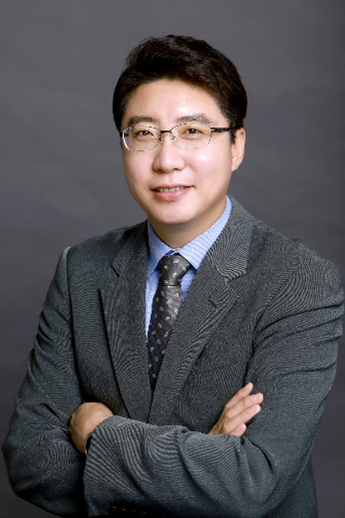
Bio: Prof. Yeong-Do Park is a Professor at Dongeui University, Korea, and a former senior researcher at Hyundai Motor Company R&D Center. His research focuses on resistance spot welding, non-destructive testing, and AI-based weld quality assurance. He has led industry collaborations with Hyundai Steel, Hyundai Automotive, and POSCO, and has received major awards from the American Welding Society. He currently serves as Vice President of the Korean Welding and Joining Society.
Digital and AI-driven non-destructive testing of spot welds: From ultrasound to machine vision
Abstract: Resistance spot welding (RSW) is the primary joining process in automotive body manufacturing, where ensuring weld integrity is critical for safety and production reliability. Traditional quality assurance, however, still relies largely on destructive testing and offline inspection, creating limitations for real-time process control. This webinar presents an overview of modern non-destructive testing (NDT) technologies for spot weld evaluation, emphasizing the shift toward digital and AI-driven inspection. Key approaches include ultrasonic testing for nugget size estimation and internal flaw detection, infrared thermography for rapid thermal assessment, and machine vision-based methods for surface defect and indentation profile analysis. The talk further discusses how artificial intelligence and machine learning enable automated defect classification, weld quality prediction, and multi-sensor data integration for in-line inspection systems. These advances support the transition toward smart manufacturing and Industry 4.0-based quality assurance for high-volume automotive production.
December 16 - 1 PM CET
Bio: Daniel is an PhD candidate at the Faculty of Engineering of the University of Porto, currently focused on the experimentally-validated numerical modelling of squeeze flow and curing processes in the manufacturing of adhesive joints. With a background in pure mathematics, computational mathematics and development and use of computational fluid dynamics software, Daniel integrates mathematical and programming foundations, in particular by approximating partial differential equations and numerical optimization, into complex industrial applications.
From flow to cure: Physics-driven modeling for high-reliability bondline formation
Abstract: This presentation establishes how adhesive squeeze flow and heat-induced curing in the context of bond manufacturing are governed by the physics of fluid mechanics and interfacial dynamics. An investigation is performed on how dispensing patterns, viscosity, thixotropy, surface tension, temperature-dependent adhesive properties, and specific cure kinetics interact to govern bondline development and structural integrity through the numerical analysis of transient squeeze flow and non-uniform heat flow models. Isolating the influence of physical variables provides practical engineering criteria to minimize defects during the joint assembly process and maximize the mechanical reliability of the resulting joints.
Contacts
For general inquiries or specific questions regarding the content, please contact: